
Site Search
powered by
Google

Ashé Journal, Vol 6, Issue 1, 51-57, Spring 2007.


Open Sesame

Tristram Burden

On. Off. On. Off.

The noise of the universe.

Time splits here, consciousness refracts.

I’d come to streamline mind into a deft, discriminatory tool again, where black and white unite into the clearest, sharpest white noise perceptible to this sense-prison. Reaching out to the first groanings of space, the dust explosion in a great breath-out, exhale of The Void outwards into sonic vibrations shaping the texture and trajectory of all gas and dust into bone and fractal sentience. Something for the Void to look out on. Something to dream.

But the outside ones convalesce in those territories, they are known from their Eldritch aura, and streak the ether wherever they become.

It was on my psychic return that I saw that streak. Amidst a blissful plateua of no ill transmission or sensory flux, in the more remote regions of Tibet, nesting in the Clear Light. It was unmistakable. And there is limited value in tolerating that bullshit.

The Outside ones had sprung a trap and a leak, and it didn’t seem as if anyone saw it coming except myself. In this gathering quiet of the final storm, Year of Our Anti-Lord 2006. Bombs dropped and otherwise intelligent men became over-tired and quit distinquishing sense from silly. And I heard quiet whispers of the Doomsday Bus, a solid vehicle designed to withstand the hellish fury of the apocalypse, began discovering things that strip minds to a bare and barren Nirvana; the kind of information that awakens one to the True State of Things, new data a stark contrast to firmly held, loved and treasured word-maps; new data a world destroyer and eviscerator in it’s own cold right. The pattern of things had changed, so I phased out and went to Tibet. I’d intended to stay longer in the field, but I needed to ken these new patterns. Fresh traces of Apocalypse had seeped into the world, louder and requiring urgent attention, and I had to cut them out at the root source—they didn’t belong: not here and not yet. Retreat to Tibet was the game-plan for reaching outside regular spaces to feel out for the seed.

And here it was. If I thought destiny was a pertintent construct, I guess this would be it.

This is my life. Scanning the frigid margins of the political elite, hunting down the real perpetrators that float in the shadows, flexing psychic muscle and in-deep with the Outside. Inbetween the dawn and the dusk we can see them running if you look with the right eyes—out from the shadows of the pillars, across the courtyards of the powerhouses, snaking their twisted wills into the heart of all rulers, trading in the deep blood of ancient and deadly forces most minds have the instinct to run from.

Socialising and investigative meandering was a foreign process after jamming deep with the Bardo. Staying in a monastery on the long journey back, I heard some stories which extended my stay longer than intended. My retreat had not been in vein. There were saucers over Ladakh, alerting me to a change in the steady loose orbit of political events. It was not only the outer reaches of the manifest world where these stains had accumulated, but deep into the very flesh of nations it now seemed.

I was twelve when I first thought I noticed problems with the way the world was run.

I was forty-six before I discovered what I could really do about it.

There was mum, Josh and my Uncle Steve, sitting around the table. Mum started frowning the day she found out about Dad. She was frowning this day, but that was before she actually knew. I knew. I’d seen them come in their black helicopters, with their sealed light green suits and invisible faces. I knew what happened. Mum was only happy when they found him suspended from a tree by his ankles with his wrists cut and a neat little note describing how everything was too much and there just wasn’t enough love anymore.

I knew what happened. And it goes something like this.

Everyday my dad would come home from work and tell me amazing stories about what he did that day. How he interviewed a space alien or how he stopped the world disappearing overnight by finding a set of crystals that nobody but him and his work colleagues knew about.

After he died, I told mum about all of the things he used to tell me, but she said, fiercely like she hated him, that none of it was true. That he was the manager of a paper-clip company and that he only told me those things because they made me smile. But I knew then that she didn’t really know, and knew that whoever those men were they were bad men who killed him because they didn’t like him anymore. Mum didn’t know about any of that stuff. But I knew. And then I found out that there was something wrong with the world if people were always keeping secrets and lies and never told each other the truth. I wasn’t going to tell any lies. I was only to going to tell people the truth, because I knew that’s what killed my dad. Not the truth. But that he had to lie. I thought that if I never told anyone that I’d lie for them then I wouldn’t get killed for telling the truth.

When they threw me in the asylum I was glad, really. I always thought it was better that people thought me crazy than they think that I was a liar. Truth is all I wanted out of life. And that’s why I was signed up to the agency.

They explained everything to me. It took five years. I’ve since grown backwards so that I am now twenty-three. I’ve been assured that I won’t get any younger. And that I could still die at any moment. So I shouldn’t worry.


Past crumbling walls of dead-end streets leading out into wasteland, the scattered ashes of Tibet, Chinese Republic stranglehold and a fierce descent into one of their many hells. This was the portal. A lingering gateway to reconciliation with the forces which appear to be outside our lives and subtly manipulating them. An Us-Them fight game where synchronising breath and exchanging polarities, acknowledging they birth each other in a Technicolor spread of reduced-speed karma, is not an option.


I didn’t see a saucer, or anything resembling or hinting towards an alien mind-control cult, but I found a disturbing proportion of the population that did.


The first was a woman, pointing out the paths these craft took, the shape of them and the feeling she had upon their passing. No mild trip, these things seemed to emit a frequency disturbing to the human energy field, something that shook it up and played havoc with our polarities.


One monk I talked to, a gentleman who was no stranger to the effects of deep sub-audible sonics upon the human aura, gave a mild, compassionate warning about approaching such craft, and showed me just how switched on he was when he said, in a cold whisper that feathered my gut: “Always they go where the atom will be split.”


The school children’s favoured subject of strange craft of strange colour, was something I refrained from whooping about—there seemed a pervasive sense of ease with the whole business, perhaps befitting a nation whose deepest myths involve the population of the world by an extra-terrestrial species giving birth to the human race as it is now. These were strange places, the lingering traces of an authentic ancient astronaut history flashing its bare-bones right into the present, flaming chariots a staple part of the Hindu mythos, and Bodhisatva’s descending from the stars to copulate with monkeys an integral part of the Tibetan anthropogony.


To these people, this was almost old news. The stark difference of this most recent visitation was the calibre of human these visitors were fraternizing with. They were taking their chances, it seemed, with the local rising stars of the Military-Industrial complex.


The wonder about this investigation trip is that it never shielded itself, never tried to delude me about where it was going to go. From the inset, from my first foot on the path back from the Bardo, I knew my career was back on track, that the threads I’d dropped, lost and discarded with extreme prejudice and tyrant fury, had patiently waited for me at the foot of the Himalayas.


When I was twelve I noticed problems with the way the world was run, but I was forty-six before I discovered what I could do about it. Theosophy, trips riding on the secret doctrines of the ages, looking around everyday and smelling something’s up. Whether it occurs when the Santa spoof is up, or when the balanced integrity of a superficially non-sexual life is devastated by the Need and the subsequent Hunt, adolescence is when the world shatters and rearranges itself into a wholly new form. If you play the right games and surf the correct channels, these experiences can occur throughout life on a very frequent basis. But still nothing compares to being dropped through the looking glass at that tender age, only to discover that this is all bullshit, and that the parents, those Untouchable Gods of the Highest heaven, have been in on it all along. It’s only later that you forgive them, that it’s possible to acknowledge that they weren’t in on it after all, merely duped like everyone else, into living behind a safe shield of signs, symbols and role-play, during which nobody remains still enough to catch flicker and interruption in transmission between the void and the ejaculate of the five-sense prison, between the next exhale and the next barking dog.


I stayed the night in Ladakh, shielded for a time by the Dharma and the Sangha, before I struck out in the morning to those deep caves, cornered off by the military but remaining accessible through unconventional means. That’s where the monks, the school children and villagers all said the saucers came from, hinting that it was also where atoms were split, flexing down into the deepest core of the Earth and her fragile, delicate but catastrophic plates.


So that was where I had to go.


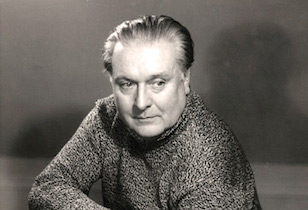
With Grandparents who were practicing Christian Scientists, a grandfather who was a yoga enthusiast and who studied eastern mysticism, an uncle who studied Theosophy, a father who was a Freemason and aspiring Rosicrucian, a mother who was a member of esoteric Christian sect the White Eagle Lodge and an Anthroposophist, from an early age Tristram Burden was surrounded by Esotericism.  A technical hitch during an Astral Traveling experiment when he was sixteen introduced him to Kundalini, and on his journey towards understanding the phenomenon he has had close encounters with a wide range of beliefs and practices. He is an empowered Sekhem practitioner, an Adi-Nath and a member of the Horus-Maat Lodge and the Order ov Chaos, and studied contemporary and alternative religions at degree level.  He has contributed material to a variety of publications, amongst them Prediction Magazine, Silverstar, and SilkMilk Magi-zain. He is also resident New Age correspondent at the on-line nexus of culture and society, Suite101.


Social Bookmarking

Add to: Digg Add to: Del.icio.us Add to: Yahoo Add to: Google Add to: Newsvine Information

ARCHIVES | E-MAIL ALERTS | AUTHOR INFO | CONTACT US

©2002-2007 Ashé Journal, All Rights Reserved.