
![]() |
![]() |
|
Ashé Journal, Vol 6, Issue 1, 39-45, Spring 2007. Parching Tea Leaves In The DarkBrendan Connel
The depression caused by the loss of my lobster, earlier that summer, found relief in the perusal of unread authors. It had cut its way through its leash while I was walking it through Central Park. I had been watching the toy sailing boats on the lake, and when I looked around my shellfish was gone. The library’s hours were limited. At five o’clock I found myself shunted onto the street, to join the round of pedestrians, being brushed against by their gold rushing legs. The mist of fantasy broke before me as the nerves in my hand ascertained a grasp, the contact of damp human epidermal tissue. The proprietor of those five moist digits turned out to be of a man I had not seen in a number of years, grim of visage, acne scarred, hair tending towards the oily, generously salted with dandruff, a nose well peppered, impissated secretions plugging the ducts of the skin. “Carlos,” he said, something probably intended as a smile wriggling across his face. “Long time no see. The physical body rots away: what is the hard and fast body of reality?” “The mountain flowers bloom like brocade, the valley streams are brimming blue as indigo,” I replied blandly. It was Barry Lagerlof, a fellow I knew from my stint at a Zen monastery a few years earlier. He was likeable enough I suppose, under his blemished exterior. But he had an annoying habit of jointly quoting, and instigating, the koans of the Zen masters of old, a trick he seemed to have unfortunately retained from his days as a Buddhist acolyte. “Nice to run into you like this Lagerlof,” I said. “It’s so easy to lose touch with one’s . . . friends . . . in a big city. And how are you? What do you do these days?” “Better than ever Carlos,” putting his hand humidly on my shoulder. “I have inherited the family business—the Kosher Pizzeria chain… Big stuff with the Hasidim. No more bumming around town, wasting time at the library. And you? What’s your current line of work? Not still chasing rainbows I’m sure.” “No,” I lied, with what I presume to have been a bright look. “I am editor-in-chief of a publication, both ambitious and new, targeting the hip, young, elite.” “Thank god,” he replied with a chuckle. “I was afraid you were still wasting your time on those dirty old French books.” “Oh no,” I said suavely. “For that sort of entertainment I visit the night clubs. I buy drinks which the bartenders don’t know how to make, ask various young women questions they don’t quite understand, and receive replies I don’t quite want to hear . . . And do you,” I continued. “Do you go out . . . enjoy the night life?” “The sacred tortoise drag its tail? God no! Not really at least. Maybe an occasional concert, a play possibly. Or the opera; we might do that. We . . . I just got married you know. Yes, no need to look so amused. I tied the knot.” I have to say that I was not merely amused, but absolutely stunned. I had always considered Lagerlof to be the type who would never get married—A condemned bachelor. Aside from his physical ensemble, which did not seem to me capable of inspiring a woman with any sort of overmastering desire, there was that obnoxious habit of his, those koans, the way he would stab at your ears with them mercilessly. He was a coarse man. “She tripped over my foot in one of my venues,” he explained. “That’s how we met . . . she bruised her knee. It was beautiful—Her knee I mean. I told her that I didn’t like to play games—I could support a wife—I needed a spiritual woman, a life companion. If you don’t grab it when you see it, you’ll be thinking about it when you’re a thousand miles away. I am the happiest man in the world—I’m in love, Carlos!” “She must be a . . . special lady,” I faltered. “I . . . I’m curious to see her—To meet her.” “Well of course Carlos, of course. You’ll come to dinner—Reed flowers drenched in moonlight—I’ll show her off to you. Tomorrow? At six-thirty?” Barry scribbled his home address on the back of a business card. With a wave of his clammy hand he thrust his body into the back seat of a yellow cab and joined the rush hour traffic. As I walked over to Sixth Avenue, to catch the F train, matrimonial visions asserted themselves throughout my cerebral hemisphere. I recalled Balzac’s Marriage Contract, ending with the desperate husband speeding away on an India bound ship, his avaricious wife, mother-in-law, and all hopes of happiness laughing mockingly behind him. But that was mere romance. In the real world surely every creature with half an upper lip can find an amorous-minded companion. I was still wondering about this as I sat in the little Morocco bar on Grove Street, puffing languidly on the hookah and enjoying a black and white martini. The despondency I had been wallowing in removed itself from the forefront of my concern. The lobster had escaped. I had probably been too lax with the leash. There was still a life to be led and queer fish like Barry to figure, to marvel at. I must say that it interested me. Running across old acquaintances often strums strange chords . The Lagerlof episode affected my taste buds. It added piquancy to the pips. My curiosity had not diminished as I crawled along the Long Island Expressway the next evening, in the rusted and rattling Peugeot borrowed from my uncle Eduard. Barry lived in Lake Success and I could feel the grin expand my facial features as I took note of the ostentatious new homes built up along his street: Homes that certainly cost money, but just as certainly lacked all but the pretenses of good taste. The new Mrs. Lagerlof answered the door and invited me in. She seemed quite nervous. I was not there to judge her, but merely observe. Actually, I barely caught sight of her face. It seemed that the rear view was quickly given precedence. Conventional clothing, such as can be purchased at a mall, though not absolutely devoid of charm, certainly lacking originality—the costume of a billion other women. So I was ushered into the living room. Barry rose, a glass of white wine wedged between the tips of his thick fingers. “You’ve met my sweetheart I see.” (His obvious pride I found embarrassing.) “Come on. With your throat, mouth and lips shut how can you speak?” “Yes. You two make a beautiful couple,” I again lied. Now that I saw her face I felt that I had seen it before. Either that, or I was experiencing déjà vu. I requested a few fingers of bourbon. My nerves were out of tune and I had high hopes a drink would compose those springy, subtle things. Unfortunately the cacophony continued. We sat through twenty-five minutes of monotonous conversation, or really monologue: Lagerlof talked only of himself, his petty ambitions, his annals and talents—His wife did not speak at all, but merely nodded her head with strained familiarity. I tried desperately to say a few easy and witty remarks, but the words that tripped from my teeth were absurd, stiff and pedantic. The three of us looked at each other in astonishment—I sensed that the planets must have been in some slight disarray that evening. Fortunately dinner was served. I cannot say that I recommend the table of Lagerlof, but then again there are few tables, either public or private, that I would recommend with any sense of honesty. It was a mildly bland seafood supper: razorback clams, a few snails, a loaf of bread, a bottle of recent wine. As I politely attempted to clear my plate of its contents my suspicions increased. I felt an absolute certainty as to a previous knowledge of the good hostess. Indeed, I had spent some rather intimate hours with the persona in question. From those insolent eyes and clipped gestures I could tell I was not mistaken. After the salty course, Lagerlof excused himself to the restroom. His wife retired to the kitchen, to get coffee and desert. I wiped my lips, folded my napkin with supreme care and followed her. As I came in she turned toward me in surprise. “The game’s up,” I said, grabbing her nose. It came off with little resistance. The creature before me screamed like a baby—as they say her kind do when submerged in boiling water. Her antennae quivered before me, sweeping the air with petulant gestures. Its eyes glistened nervously at the end of their stalks. “Please remove yourself from those jeans,” I said, calmly and with great dignity. “You are going home with me.” Unfortunately she was prone to be rebellious and snapped at me. “You spineless beast,” I reprimanded. “Do you know how ridiculous you look in that get-up? . . . It’s shameful.” I was not particularly in the mood for a drawn out scene. I collared her. Sensing the uselessness of further deception, she molted her garments. I grabbed her by an antenna and led her out of the kitchen and toward the front door. Lagerlof was just then reappearing. He looked shocked, scandalized. “What are you doing with my wife?” he cried, grabbing at one of the tremulous, red claws. “The valley’s single plum flower!” “Hands off,” I parried. “The creature was my lobster before she was your wife. I am in a position of precedence.” “I had no idea though,” he stammered. “. . . And I really don’t see the difference.” “Then I feel profoundly sorry for you Lagerlof,” I said, heading out the door, the creature secure in my grasp. “Women are generally more appealing spouses than shellfish. After all, it’s hardly kosher.” “But we have matching temperaments!” he wept. “What will I do with myself?” “On the left horn of the snail is a kingdom called Resignation. Travel those myriad miles,”I advised as I shoved my squirming burden into the passenger seat of the car.
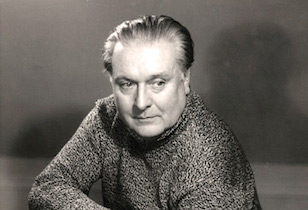
Brendan Connell currently lives in Ticino, Switzerland, where he teaches English and writes. He has had fiction published in numerous magazines, literary journals and anthologies, including McSweeney’s, Adbusters, Nemonymous, Leviathan 3 (The Ministry of Whimsy 2002), Album Zutique (The Ministry of Whimsy 2003) and Strange Tales (Tartarus Press 2003). His first novel, The Translation of Father Torturo, was published by Prime Books in 2005; his novella Dr. Black and the Guerrillia was published by Grafitisk Press the same year. |
|
|||||||
|
|